
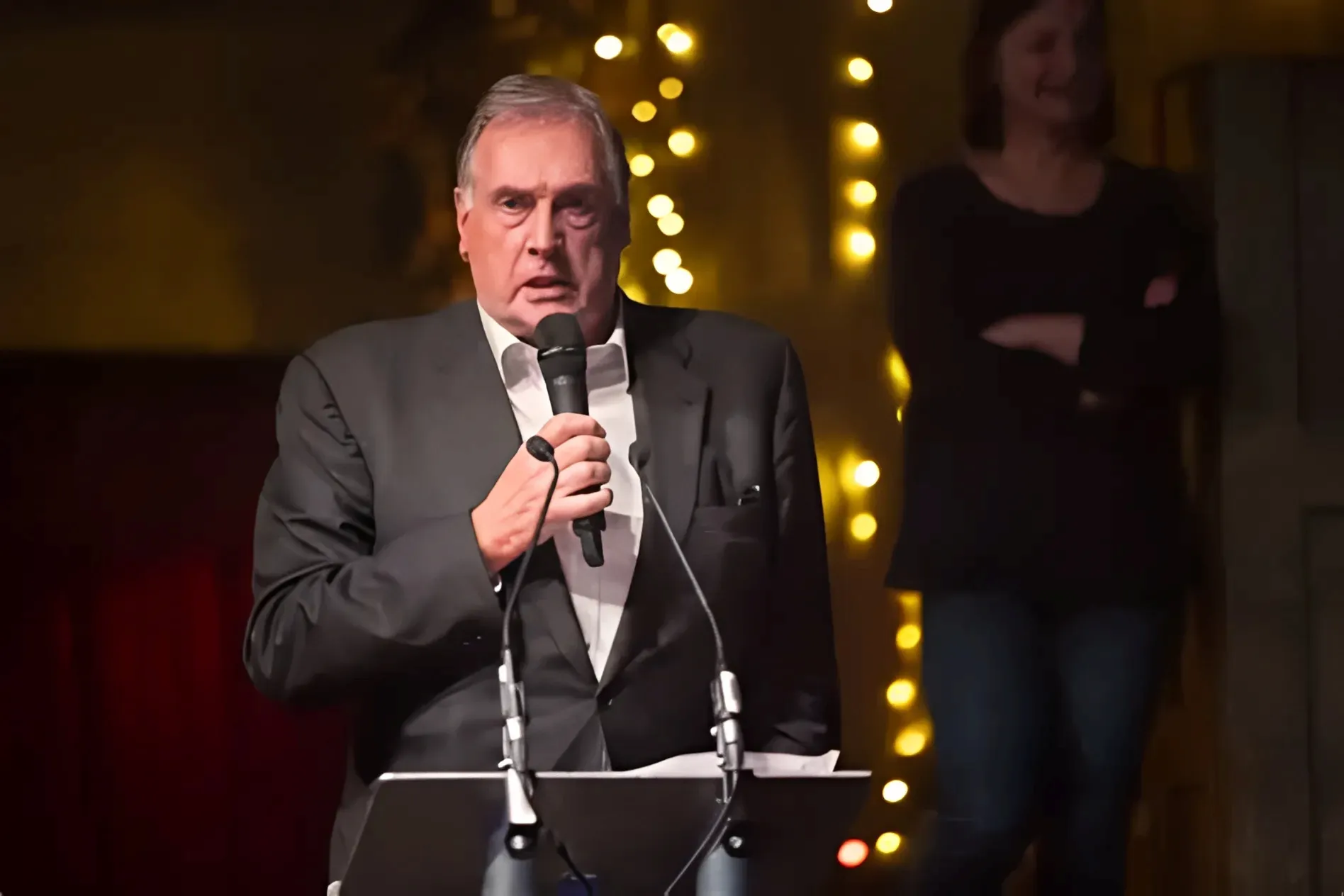
By Phil Soar, Chairman of CloserStill Group and Nineteen Group
First of all – I don’t know. Secondly, no-one knows. Thirdly, Trump certainly doesn’t know.
It depends on whether the duration is short or long. Remember: Putin was told his Ukraine invasion would be over in a week. Here we are four years later.
For completeness, I should add that neither of my companies (CloserStill nor Nineteen) has any interests in the Gulf region.
But let’s do the simple parts. Geography won’t change. The Strait of Hormuz will stay where it is, 21 miles wide. Iran is likely to be an unpredictable entity for a very long time. Over time the world will seek to lessen Iran’s strategic power.
The geography will not change
Oil and gas production will increase elsewhere in the world – Brazil, Angola, Nigeria, Brunei and above all else the USA. This will take time but it will happen. Even our stumbling government will quietly move to more oil and gas drilling in the North Sea, perhaps even facing down its bed-wetting back benchers in the Commons.
The UAE and Saudi Arabia will build more pipelines across the Arabian Peninsula to the Red Sea and perhaps Oman. There will be greater investment in renewables and nuclear to reduce the Iran threat. This takes time – at least 5 years – but it will happen.
Iran will institute an unofficial toll system for the Strait. Tankers going to “non-combatant” countries (particularly China and India) will pay a toll (the going rate appears to be $2 million a tanker) and will not be molested. Iran is reported as already offering such a deal to Spain.
The easy bit – probably a recession
We can guess the short-term economic effects. We are already seeing them. The ten-year gilt/bond rate has already risen to 4.8%/5+%. This determines mortgage rates, which are rising, the Bank of England/Fed interest rates (which will now rise north of 4% if not higher). As a sign of the lack of confidence in the UK economy, in the four weeks after the war began the price of British government debt rose twice as fast as in the other major economies.
And inflation will rise quickly as prices rise everywhere – not just at the petrol pumps. Partly this is “real”, as prices of fertilisers etc jump, and partially it will be front-running – companies rising prices trying to get ahead of future inflation (trade show companies are spectacularly bad at this, partially because of the long lead times).
The OECD has already downgraded the UK’s GDP figures to 0.7% in 2026 (in GDP per head terms this means negative growth per person), and it is easy to see how this will dip into negative territory and we find ourselves back in recession again.
The impact on UK trade shows
The effect on UK trade shows is not easy to predict. It depends on which part of economy they operate in. But a simple guess would follow historical trends. Retail and consumer shows at risk; manufacturing and construction shows not ecstatic; the IT end and medical/healthcare still positive.
A recession and higher inflation will have some effect on UK exhibitions, though because of our slow-cycle it will take some time to be apparent. The “average” event in the UK is already 29% smaller (in square metre terms) than it was in pre-Brexit 2016 (data from SASiE) and that gives some indication of trend lines. But because nearly all UK shows are “provincial” rather than “international” the effects may be muted and by the time (say 12 months) the effects can be judged the immediate crisis may have receded.
But those are the easy questions to answer. The more difficult ones are about how it affects the industry in the Gulf.
Informa’s pivot to the Gulf – what effect on our biggest company?
In the past two decades the Gulf has become a massive centre of activity, investment and hope (throw a stone from a Dubai skyscraper and you will probably hit an influencer in a Porsche). Informa’s Steven Carter moving there was a bellwether. His joint venture with Dubai, and the enormous investment in the Saudi joint venture Tahaluf were the cornerstone of Informa’s announcements in recent times. Based on what can be gleaned publicly, these moves seemed likely to generate at least £350 million a year for Informa, though the projections were necessarily vague. At the very least, such projections must now seem optimistic.
What happens to dmg?
And then there is dmg. The great majority of their exhibition income derives from the Gulf. The sudden halt to trading there has particular significance with Rothermere’s failure to buy the Daily Telegraph. European media giant Axel Springer’s sudden arrival as the acquirer of The Telegraph not only throws dmg’s core strategy into doubt, but also creates a very well-funded rival for the readership on the right of British politics. In this situation, dmg’s trade show assets have become much more significant.
Understanding the UAE
To understand the effect of the war on Dubai and Abu Dhabi, one needs to understand what the UAE is. It is highly peculiar in that only a small percentage of its population are citizens. Outside Monaco and other Gulf states like Qatar, it is hard to think of anywhere else similar. The UAE has a population of some 11.4 million, of which over 10 million are non-citizens, nearly all having visas lasting no more than 2 years. So the population is transient and, in the nature of things, if the going gets tough, many will get going (traffic in the big shopping centres is reportedly already 60% down).
90% of the UAE population are non-citizens
The growth of Dubai and Abu Dhabi since 1980 has no parallel in modern history – even 20 years ago looking down on Dubai from the air reminded one of Blade Runner. Since 1980 the economy has grown from circa $30 billion annually to north of $500 billion. And only 23% of this is oil/energy related. The other 77% is in financial services, tourism, transport and construction. Unlike Saudi Arabia, it is no longer an oil economy.
“Unlike Saudi Arabia, the UAE is no longer an oil economy”
Their sovereign wealth funds hold around $2 trillion (that is 12 noughts) and its main port, Mina Jebel Ali, handles 20 million containers a year and serves 170 shipping lines. Dubai is the largest international airport, by some distance, in the world.
But, but… For all its economic strength the UAE cannot relocate. It will always sit opposite an unfriendly Iran with 92 million people. It is clear that the current (and presumably future) regime in Iran hates seeing an open, resilient, westernised economy in its own backyard – the world’s most contested region. The success of the UAE goes against everything the theocracy of Iran believes in.
Over the years, successful, long-lasting trade shows offer resilience, certainty and predictable marketplaces. They survive crises and pandemics and their geography (Frankfurt, Chicago, Milan) is central to that. Even longer term, short of 1914 and 1939, the world economy is too large, too diverse and complex and tends to deal with crises more easily than headline writers would have us believe. Covid was the greatest disruption since 1939, but economies (and trade shows in particular) rode it out.
Dubai cannot change its geography
But wars and disruptions can affect specific trading venues, particularly if their histories are short. We can see that today. Anyone visiting the Valley of the Kings in recent years (as I have) is struck by how quiet it is compared with 20 years ago before the tourist massacres and the Moslem Brotherhood rebellion. Though it is difficult to find reliable numbers since the Chinese take over, Hong Kong has not recovered fully following the riots of 2019 and 2020, not to mention an over-repressive pandemic.
In the case of Hong Kong, there was a secure alternative in Singapore, where the trade show market has boomed.
And in the case of the UK, the self-inflicted lunacy of Brexit has led to our industry now having 22% fewer exhibitors at our exhibitions than in 2016 (and those numbers were falling fast before the pandemic). This is from the SASiE reports – and although the number is startling, the data is solid.
So what will happen to events in the Gulf in the near term – the part of the world in which our largest company, Informa, has promoted so publicly. Since the war began, the Informa share price has fallen 23% – though I don’t read too much into stock market gyrations. Informa’s profits will not fall by 23%, although the reaction partially reflected their very public recent investment in the Gulf.
Will investors (with a choice) choose Dubai?
Stating the obvious, no one has a crystal ball. But we can start with the basics. There must be some reluctance to invest across the water from a proven highly dangerous regime, especially when conflict is raging.
Trade shows thrive on new ideas, new investors, companies with new products to display. We must assume that companies looking to expand geographically might decide that this is not the time to spend that money in Dubai, but might look at Mumbai or Singapore instead.
“It would be wrong to suggest that there will be a dramatic decline”
This does not imply a sudden rush away from the UAE, rather that new investment decisions are stalled and that extra 10% goes elsewhere. Businesses already embedded in Dubai won’t rush away, so it would be wrong to suggest that there will be a dramatic decline in the industry.
We have seen exactly this in the UK since 2016. Businesses that are expanding usually have a number of places they can go to next. After Brexit they decided that the political uncertainty, the impossibility of predicting what legislative barriers might be thrown up, and the likelihood that the UK economy would grow more slowly than all other major economies were all good reasons to invest elsewhere. And so it has proved.
We will probably see something similar in the UAE and Saudi Arabia (though Saudi is a far larger country with a Red Sea coast as well as a Gulf coast). The threat of Iran is a disincentive to visit and to start or expand a business. I have relations in Dubai. They say that the threat of missiles is not particularly troubling. It is the question of what might happen next which builds uncertainty. The foundations of Dubai and Abu Dhabi as a major centre for trade shows are not very deep. It is easy to argue that they are built on sand.
I will end where I began. No one knows. The duration of this peculiar war will be the determining factor. But the long-term prospects for trade shows in Dubai and Abu Dhabi today must, at the very least, be quite a bit less rosy than they appeared just six months ago.
Source: www.exhibitionworld.co.uk
Comments are closed.