
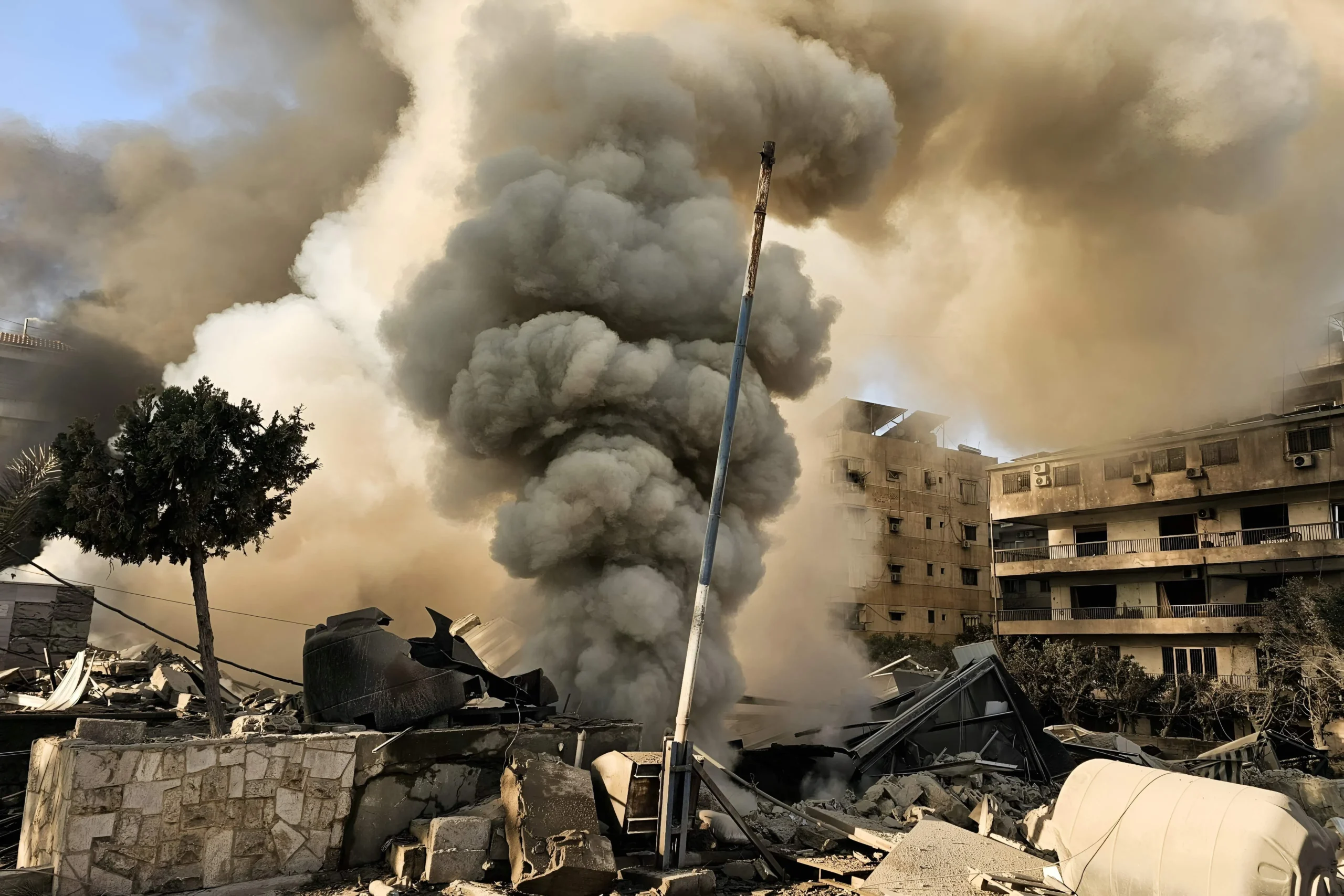
What began as a fast military operation is now turning into a protracted modern war. Just today, the US struck three Iranian vessels believed to be oil tankers, as well as two Iranian “missile catamarans”.
Concerns are growing as oil prices skyrocket. Iran is not the same enemy that the US faced in Iraq or Afghanistan. If a ceasefire isn’t negotiated quickly, Iran has the ability to trigger a global economic crisis.
A significant escalation occurred this past weekend, as the US and Israel attacked refineries near the Iranian capital. The resulting blaze covered the sky above Tehran in ash and has poisoned the air for the 10 million residents living there. This may have hindered the chances of a de-escalation.
What’s more, a water desalination plant was struck by US/Israel, which has been decried by some experts as unwise. Iran has minimal reliance on desalination for its water supply, while the Gulf states are much more dependent. Bahrain, Kuwait, the UAE and more need desalination in order to supply water to their residents. If Iran retaliates in kind and attacks water desalination plants, the effects could be devastating.
Of course, reliably accurate information is difficult to obtain, as we are inevitably relying on Iran, Israel, the US and Gulf countries for data, but one thing is clear: Iran is not the easy opponent that the Americans perhaps believed.
Iran continues to launch drones and advanced technology missiles at Israel and neighbouring countries. Dubai International was struck yet again over the weekend, with potential damage to one of its runways.
What is the timeline?
Iran claims it has the stockpile and production capacity necessary to sustain its rate of attack for another six months. Some military hardware experts are estimating that Iran’s rate of drone production is 5,000/month, meaning that it has capacity to wage war on US/Israel and allied nations for an extended period.
What is the best outcome?
The best (and arguably most sensible) outcome is for the US and Israel to negotiate a ceasefire as soon as possible. If not, Iran can use its firepower to assault energy infrastructure in the region, as it has been doing thus far. Over the weekend, Iran attacked oil refineries in Bahrain and Israel (and possibly more).
As of today, 9 March, the price of oil per barrel breached $100 (that may have now fallen back under $100, but some analysts believe this is simply due to the US Treasury shorting oil as a desperate measure). Since Iran’s closure of the Strait of Hormuz, the world has lost a supply of oil worth 20m barrels per day. That is 10 times the shortage the world faced during the outbreak of war in Ukraine in 2022.
What is the worst outcome?
In short, the worst outcome is a global economic crisis, a protracted war and boots on the ground deployed by the US. If Iran continues to attack energy infrastructure and block the Strait of Hormuz, many countries across the world will face an energy shortage – from South Korea and Taiwan to the UK and Germany. Rising oil and gas prices will trigger inflation and increase the cost-of-living for consumers.
It’s not only oil that travels through the Strait of Hormuz – a large amount of chemicals also flow through the maritime route. Key ingredients for fertiliser come through the Strait. Without a reopening of this route, we will also see a global food shortage. We will also see a shortage of chemicals used in the production of technology, for example the semiconductors that are largely made in Taiwan.
How do events fit in?
Events and tourism, of course, face a similar issue. The war has already gone on longer than many hoped. The UAE and Saudi Arabia have suffered significant blows to their reputation as a safe destination. If coming weeks don’t see a dramatic de-escalation, it is possible that the events industry in the Middle East won’t recover for years to come.
There are concerns that the Gulf states could find themselves in a far more precarious situation soon. Since the US/Israel’s attack on an Iranian water desalination plant, some fear that Iran may employ the same tactics on countries like Kuwait, the UAE, Qatar and Bahrain. These countries rely heavily on desalination to provide water supply. A humanitarian crisis in any of the Gulf states would deepen the perception that they are no longer safe havens for business.
If you’d like to share your thoughts with us, get in touch by emailing treilly@mashmedia.net.
Source: www.exhibitionworld.co.uk
Comments are closed.