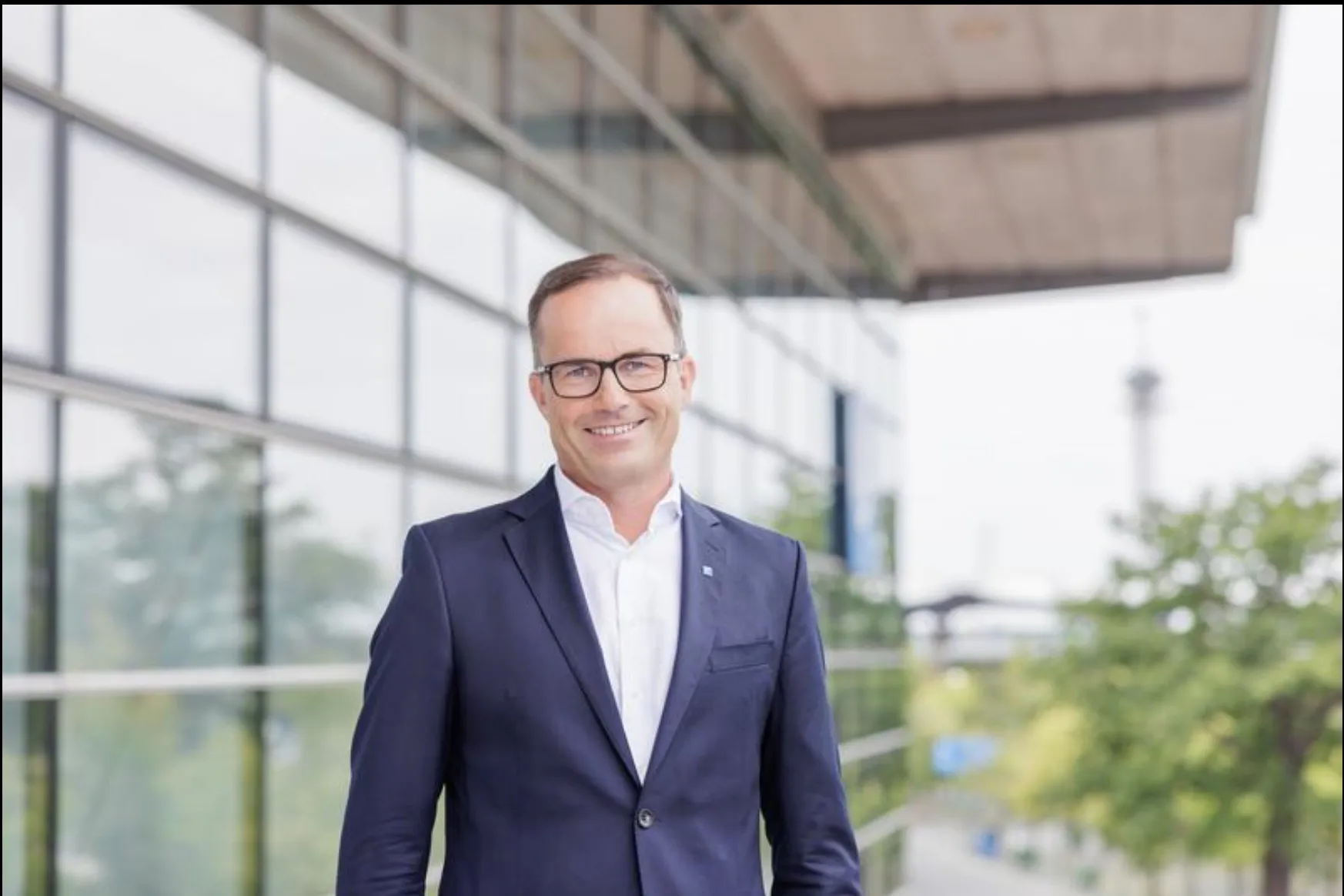
EW interviewed the chairman of the Board of Deutsche Messe AG in Hannover, Dr Jochen Köckler, about business and Germany’s place in the trade fair universe.
EW: How is business in 2026 and how does the pipeline look?
JK: 2025 was a very successful year for Deutsche Messe AG, with strong financial performance, solid growth across our event portfolio and positive international momentum. The company achieved revenues of approximately €300m and earnings of around €20m.
We continue to see strong international demand for leading global trade fairs, particularly in industrial transformation, digitalisation, energy, logistics and technology sectors.
Looking ahead to 2027, we will host ITMA in Hannover, one of the world’s leading textile technology exhibitions. In addition, we will celebrate the premiere of DSEI Germany, which we are organising together with Clarion Events. Our ambition is to develop DSEI Germany into the leading defence and security exhibition in Germany and beyond. We are also continuing to expand internationally.
EW: What are the key USPs and advantages exhibition organisers can find when working with you?
JK: One of our biggest strengths is our international reach and extensive experience in organising world-leading industrial trade fairs. Hannover is a premier exhibition destination, particularly for industrial technology and innovation events. We combine state-of-the-art infrastructure, digital expertise, strong global networks and deep sector-specific know-how. Another important advantage is our ability to create international business platforms that connect exhibitors, visitors, policymakers and technology leaders. We also continue to invest heavily in sustainability, digital services and customer experience.
EW: What are the main challenges in the international exhibition market now and how are you dealing with them?
JK: Geopolitical uncertainty, rising operational costs, sustainability requirements and changing customer expectations. Digital transformation is also reshaping how events are planned and delivered.

EW: What trends are you seeing in exhibition design and delivery?
JK: We see strong demand for hybrid communication tools, data-driven event services and more experience-oriented exhibition formats. Sustainability has become a central aspect of stand construction and event planning. There is also growing interest in interactive formats, networking technologies, AI-supported services and content-driven exhibitions that combine conferences, innovation showcases and live demonstrations.
EW: How is the German Messe model changing in view of recent joint ventures with foreign organisers?
JK: Joint ventures and co-operation with international organisers are helping German exhibition companies expand their global reach and create new business opportunities in growth markets. One example is our co-operation with Clarion Events for DSEI Germany. Another important milestone will be the premiere of European Energy Week, which we will organise with dmg events.
EW: How is AI affecting your business?
JK: AI can improve matchmaking, visitor services, event analytics, marketing automation and operational efficiency. At Deutsche Messe AG, AI is also highly relevant because many of our events focus directly on industrial innovation, automation and digital transformation. AI is therefore both a business tool and a key exhibition topic within our portfolio.
EW: What of the future – is your business investing in expansion abroad and/or in the venue itself?
JK: Yes, both areas remain important. Deutsche Messe AG continues to strengthen its international activities through overseas events, partnerships and global business networks. At the same time, investment in the Hannover exhibition grounds and digital infrastructure remains essential to maintaining competitiveness and delivering high-quality visitor experiences.
Source: www.exhibitionworld.co.uk