Bruno Marx worked with jwc consultancy to examine the true cost of ‘showcase spending’ in event safety and security. He shares his insight here.
When something goes wrong at an event, the story moves faster than the incident report.
The attempted attack at the White House Correspondents’ Dinner in Washington is a recent example. It was, by any measure, an exceptional security case: a high-profile political dinner, the most senior officials in the room, an armed suspect, a security checkpoint and the Secret Service involved. According to reports, the suspect allegedly ran through a checkpoint and fired at an officer, who was protected by body armour. The event then triggered exactly the kind of follow-up debate that now surrounds many high-profile gatherings: Was there enough security? Was the event given the right risk status? Should more visible protection have been in place?
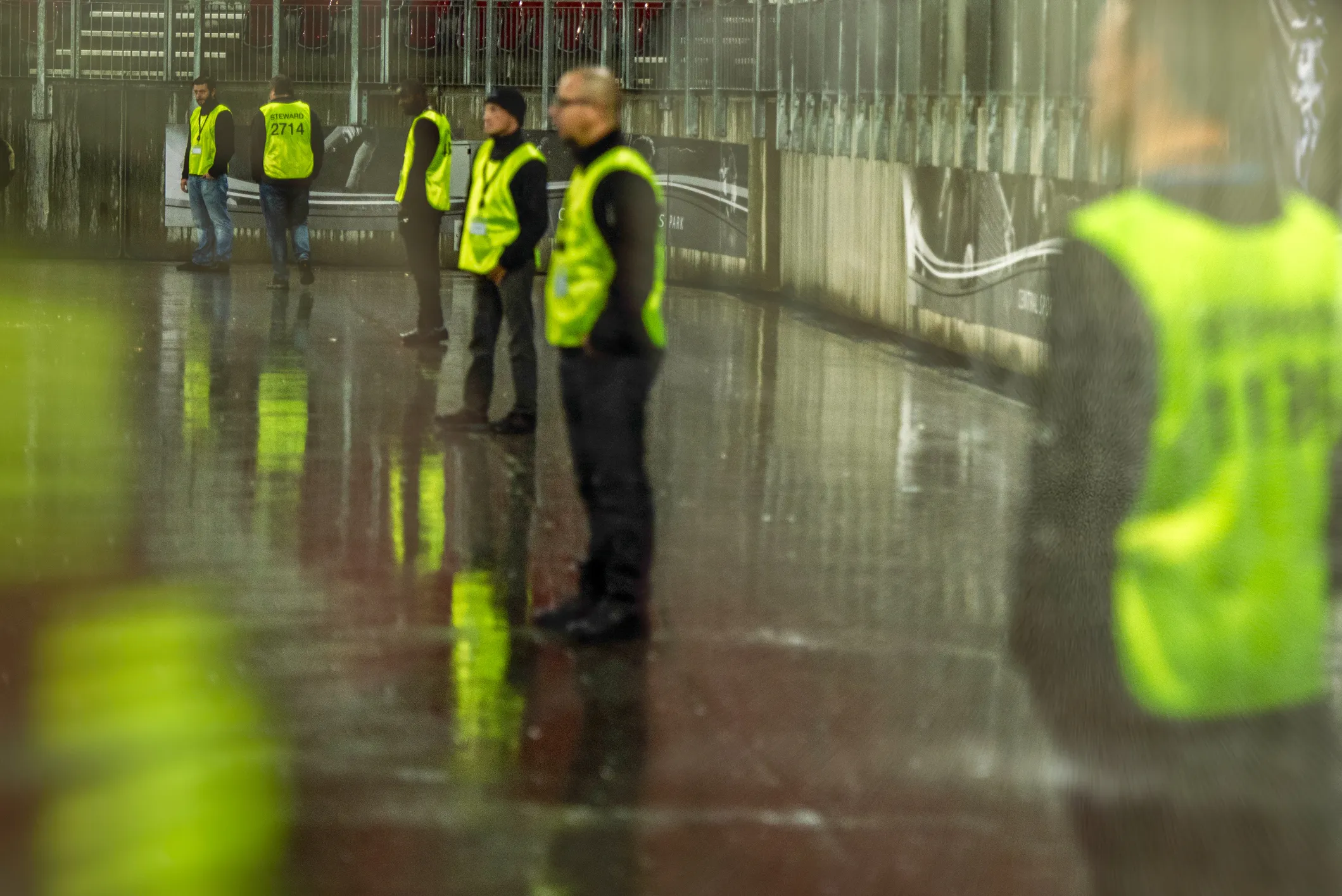
Those are legitimate questions. But they also show how quickly the conversation after an incident moves toward what can be seen: more guards, more barriers, more screening, more perimeter control, more visible reassurance.
Sometimes, that is exactly what is needed. Sometimes, it becomes showcase spending.
Showcase spending is money spent to demonstrate that action has been taken. It is visible. It is defensible. It reassures clients, boards, authorities and the public. But it can also pull attention and budget away from less visible risks that are more likely to disrupt an event, injure people or damage a venue’s reputation.
A stronger security presence will not fix a weak contractor induction process. More access control will not compensate for blocked emergency exits. More guards at the entrance will not prevent an electrical fault during build-up, a delayed medical response, or a crowd-flow problem caused by a late layout change.
That is a lingering imbalance that our industry often fails to address.
The risks hidden in routine operations
Event safety failures often begin with ordinary operational issues. Like a cable run that was not properly checked. Or a temporary structure signed off too casually. A forklift moving through a congested build-up area. A contractor working under time pressure. An emergency route narrowed by storage. A medical plan that looked adequate on paper but was not tested against the actual crowd profile. The list is endless.
None of this is unusual in the exhibition and convention business. And that is precisely why it matters.
Build-up and dismantling periods combine compressed timelines, heavy equipment, electrical work, temporary structures and multiple suppliers working in the same space. The organiser’s own team may be well trained. The venue’s procedures may be clear. But once dozens or hundreds of third-party contractors enter the site, the risk profile changes.
The same applies during live event days. A crowd management failure can become a 30-second video labelled “chaos”. A preventable medical emergency can become a photograph with an ambulance in the background. A small equipment failure can become the search result a future client finds when deciding whether to book the venue.
The reputational damage rarely waits for the formal review. A small, quickly contained fire on site can lead to a firestorm on social media. Real damage on site: minimal. Reputational damage for the event: through the roof.

Fear is not a plan
Security planning is essential. The key is to spend more intelligently across the full risk picture.
After major incidents, our industry instinct is as predictable as it is understandable: respond visibly. But fear-driven budgeting can distort priorities. It sends money toward threats that look most alarming, while more probable operational risks remain under-reviewed.
A trade show in a controlled convention centre with pre-registered professional visitors does simply not carry the same exposure as an open-air public festival. A medical congress is not a stadium concert. A government summit is not a regional association meeting. Treating them as equivalent is not caution. It is the absence of proper differentiation.
This was visible during the pandemic, when exhibitions were often treated like concerts or mass gatherings despite very different operating conditions: controlled access, wider aisles, registration data, professional attendance and different density patterns.
Three questions before the budget is spent
In jwc’s venue safety and security work, the starting point is a simple sequence.
First: What is the actual threat? Not what feels threatening in the news cycle, but what realistic intent and capability exists in relation to this specific event, venue, audience, location or sector.
Second: How exposed is the event? Audience profile, access model, event format, location, publicity, timing and operating environment all change the answer.
Third: what is the real risk? Risk is the combination of likelihood and impact. A low-probability, high-impact threat may require serious attention. But so does a higher-probability operational failure that is less visible and more likely to occur.
This sequence changes the spending conversation. It moves the discussion from “what will look reassuring?” to “what will reduce the most relevant risk?” And that is the difference between visible preparedness and proportionate preparedness. The problem is that many venues, organisers, event managers and authorities are not used to thinking this way.
The copy-paste risk assessment
One warning sign is the reused risk assessment: Every organiser and venue professional knows the habit. Last year’s document is opened, the date is changed, a few details are updated, and the file becomes this year’s plan. In some cases, even the old dates remain.
The templates are not the problem here, as a good template creates structure. The problem is treating an old document as proof of current preparedness. Every risk assessment belongs to a specific event, in a specific venue, at a specific time. The threat picture may have changed. The layout may have changed. The contractor base may have changed. Audience numbers, arrival patterns, programme design, catering flows, security posture and emergency access routes may all be different.
A proper review asks practical questions: Has the event profile changed? Has the audience changed? Are there new exhibitors, speakers, sponsors or public sensitivities? Were there near-misses last year? Did communication between venue, organiser, security, medical teams and contractors work as intended? Were emergency routes kept clear during build-up, live days and breakdown? Did contractors follow agreed procedures, or only sign that they had read them?
Without that review, the document may create comfort. It does not necessarily create control.
What good looks like
The strongest venues and organisers treat safety and security planning as a live management process, and not as a compliance file.
They review the full event cycle: planning, build-up, open period, breakdown and post-event learning. They look beyond visible security to contractor management, crowd movement, medical cover, fire prevention, emergency communication, temporary structures, equipment safety and technical checks.
They build event-specific plans rather than one-size-fits-all templates. A conference carries different risks than an outdoor festival. A controlled-access exhibition is not the same as a public consumer show. Treating them as equivalent – because it is easier – is not caution. It is the absence of thinking.
They also learn from near misses. After each event, they record what changed, what almost went wrong, what worked and what needs to be adjusted. They look at incidents elsewhere and ask whether the same failure could happen in their own venue.
Independent review helps because it tests assumptions. Internal teams know their venues and events well. That is an asset. It can also make familiar risks easier to overlook. The purpose of an external challenge to these is not to produce more paperwork. It is to test whether the plan still reflects reality.

The commercial edge
This is no longer only a technical or compliance issue. It is increasingly commercial: Clients are asking harder questions. Corporate organisers, associations, public-sector clients and international event owners want evidence that risk is being managed professionally. Procurement, legal and insurance teams are more involved than before.
For venues and organisers, that creates a competitive distinction.
A venue that can show current, event-specific and independently tested safety and security planning is in a stronger position than one relying on generic documentation. An organiser that can explain why resources are allocated to certain risks, and not simply to the most visible ones, gives clients greater confidence. Rigour becomes part of the value proposition.
The goal is not to spend more. It is to avoid spending heavily on the risks that are easiest to see while leaving more probable operational risks under-managed.
Or: It is precisely the way to prevent yourself from showcase spending.
The question to ask
If something serious happened tomorrow, say, a contractor injury, an equipment failure, a medical emergency, a fire incident, an evacuation: could you show that your planning was based on a current, event-specific and evidence-based assessment of the real risks?
For many organisations, the honest answer will be partly yes and partly no. That is not a failure. It is a starting point. And the gap, where it exists, is usually fixable: a fresh review of the risk assessment, a clearer view of where resources are going, and an honest check on whether operational safety has kept pace with visible security investment.
The purpose is not to create a perfect document. It is to build confidence that safety and security planning reflects the risks most likely to define the outcome of the event, not just the risks most likely to dominate the conversation.
Ultimately, it is about protecting an organisation’s reputation: It will be shaped by the incidents you prevented through proportionate planning. Or by the incident you may have to spend years recovering from because anxiety, rather than analysis, drove decisions.
Author note: Bruno Marx is the practice lead at jwc on venue safety and security for exhibition and convention facilities. With 40 years of experience across more than 100 venues, he helps organisers and venues develop proportionate, evidence-based risk frameworks that strengthen protection, resilience and client confidence. jwc is a leading consultancy for the global exhibition and conference industries.
Source: www.exhibitionworld.co.uk