
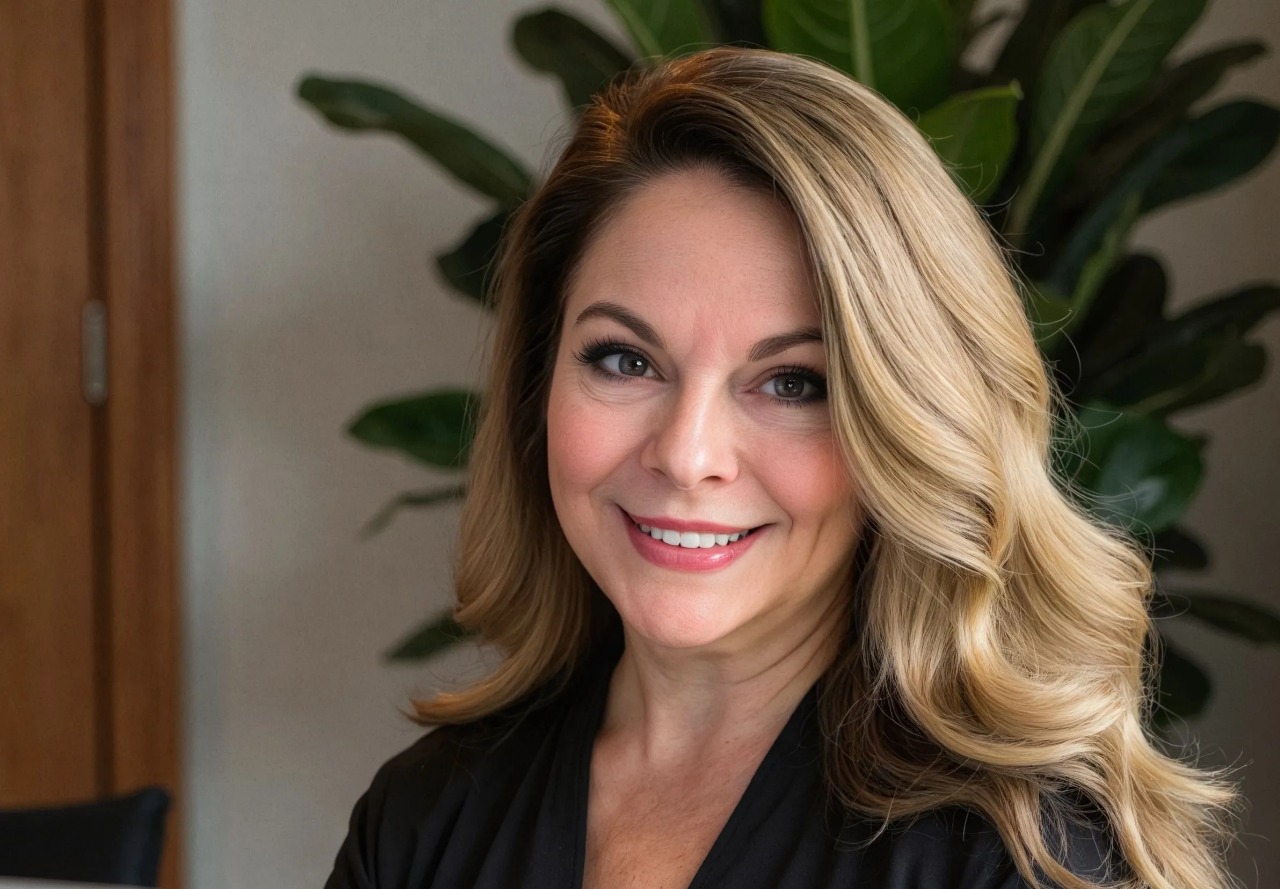
An interview with Martha Donato, regional director, UFI North America
By Iain Stirling
The exhibition industry finds itself at a crossroads. With rising tariffs, visa processing delays, and a persistent lack of recognition from policymakers, industry leaders are seeking new ways to amplify their voice on the global stage. Enter the Global Policy Forum – a groundbreaking initiative launching in Washington DC this May.
I sat down with Martha Donato, regional director for UFI North America and the driving force behind this ambitious project, to discuss why now is the time for the industry to come together.
Iain Stirling: Martha, in your capacity as founder & CEO of MAD Event Management, and as regional director of UFI North America, you’ve collaborated with the Exhibitions & Conferences Alliance to establish the Global Policy Forum. What inspired the creation of this initiative, and why do you believe it holds such significance for the exhibitions industry at this moment in time?
Martha Donato: Thanks, Iain. As regional director for UFI North America, advocacy is one of our key pillars, and with the disruption happening because of our government, we started having internal discussions at UFI about what more we could do to provide information for our members. We ran a session when we were in Milan at the Global CEO Summit, and a lot of people asked questions about why we’re doing certain things and how we’re supposed to react. That prompted us to go deeper in our own internal discussions and find some pathway that we could share information, and then from there, start to build relationships in a much more meaningful way. It will take time, but we start here.
IS: Can you explain the relationship between UFI, ECA, and your company in this initiative?
MD: Absolutely. Just for a bit of background, UFI was a founding member of the Exhibitions & Conferences Alliance, and as such, they have one board seat. I was very fortunate to be allowed to take that board seat at the ECA. So now you layer in this primary responsibility of advocacy efforts at UFI, and we have this ECA coalition happening in the US, with Tommy Goodwin as the executive director of that organisation.
Over the course of our discussions, we agreed that it would make sense for a third party – in this case, MAD Event Management – to take the lead as producer. This approach allows greater flexibility and creative freedom in shaping the content. In essence, we’re combining strengths: MAD brings its production expertise, while UFI and ECA contribute valuable content, relationships, and industry insight. This setup also gives us scope to keep things broader and less tied to the specific missions of UFI and ECA, creating more room to evolve the concept as we move forward.
IS: So, while not a public-private partnership in the traditional sense, is it fair to say it involves close cooperation across different parts of the industry?
MD: Exactly. UFI and ECA will be primarily involved in helping us put together the content, finding the audience, developing relationships. But with MAD Event as the producer, we’ll be allowed to colour outside the lines a little bit in terms of what we talk about. It’s a private, independently owned company representing two important industry associations, and we’re respectful of each other’s roles. That partnership gives us this chance to be part of that week in Washington.
IS: You’re scheduling this during the same week as other industry events in Washington, such as ECEF. Is that intentional?
MD: Very much so. We’re leaning on the same audience, not entirely, but to a certain degree. There’s an element of sustainability to consider – we’re very mindful of not asking people to travel to a city without having multiple reasons for doing so. That week in May, over the last several years, has built into a very strong industry moment.
IS: Tell me about how this complements the Legislative Action Day.
MD: ECA produces the Legislative Action Day, which is very important and has been growing over the years. As you know – you were there this year with the Nevada delegation.
IS: I was indeed. I remember seeing you there.
MD: That’s right! So, you know that we go up to the Hill and take meetings with our legislative branches, and the issues we talk about are very limited in scope. It’s not broad, it’s not industry focused. It’s about industry issues that have already been proposed legislation that’s already pending that we’re trying to influence.
The Global Policy Forum allows us to talk about more broad-based coalitions between, say, ambassadors, trade officials, other industry associations who are also very focused on advocacy. Take, for example, CTA and CES. They’re a very active UFI member, and they also have their own internal lobbying and advocacy arm, and they’re willing to lend their support to help us grow this so that it has benefits across the entirety of the industry.
IS: Does the current Trump administration make this more urgent? Given what’s happening at the moment and the various cuts?
MD: I think it does create more of a sense of urgency, because we felt that sense of disconnection. Who would have thought that we would be in an argument – in a trade war – with Canada? That just seems nearly impossible to even say out loud.
Much like we had a shock during Covid – when we realised our industry wasn’t actually recognised in Washington for any federal funding or relief funds and things like this – that was the birth of the ECA. I think this is an equal amount of shock to us that we could go this far afield from our partners and neighbours.
“We’ll still be here when that administration is over”
So this is our way of saying: well, our federal government has certain issues that they’re dealing with, but we shouldn’t be beholden to that, because we’re going to survive that administration. We’ll still be here when that administration is over. Let’s make sure we’re doing everything we can to strengthen our relationships globally, and that’s the point of this. Let’s make sure we know who the people are we should be talking to, who should be educated about our economic impact that’s significant across the globe.
“The barrier to entering the country just keeps going up”
IS: What do you think are the most pressing policy issues we’re currently facing in our market?
MD: Well, certainly the tariffs are a big issue for us on a lot of levels, and the visa processing times. I mean, this idea that came out that we’re going to charge $250 to enter the US – the barrier to entering the country just keeps going up, and that’s a big problem for us on the trade show and exhibition side.
IS: Why is it essential for policymakers and industry leaders to collaborate internationally, and what are you hoping to achieve from this particular event?
MD: What we’re hoping to achieve is an acknowledgement that we exist as an industry globally. We could do this just in the US, or we could do it just in Mexico or Canada – and they are doing it independently – but if we pull it all together, we hope to have ministers from all the relevant regions represented.
That would be the goal: really just to bring more awareness, a much higher awareness. From awareness will lead to actual trade. We’re hoping for treaties, and we’re hoping for trade agreements, and we’re hoping for cross–border collaboration. Not that one meeting makes that happen – it’s just opening the door that we could do more together than we’re doing in our independent silos.
“We start here, and ideally, this would move to other locations”
We still have to do that work, but we can come together and say, “Here’s what I’m doing in Abu Dhabi, and here’s what I’m doing in Ireland, and here’s what I’m doing in Washington DC,” and then let’s share resources. Let’s share relationships. Let’s talk about where we have some opportunity to do more together. We start here, and ideally, this would move to other locations as it’s relevant and needed.
IS: I just don’t understand why this is such a struggle for the government to realise the value of our industry and how much we bring to the table.
MD: It is a huge struggle, and it is mind–blowing that they don’t understand.
IS: I believe sustainability is quite a key part of the forum as well. How do you think exhibitions can balance environmental responsibility with the need for growth and innovation?
MD: Well, in the work we’ve been doing the last two years with Sustainable Events Summit – and we’ll continue to, and it will be part of this agenda – it’s awareness to start, right? First, we have to understand where we can make changes, even the small ones that start to have impact. Then from there, we have the Better Stands initiative that took a lot of people to get together. It’s not an easy lift, but we have to do small steps now that will lead to the bigger steps.
My feeling is, and we have improved – but my concept of the whole industry and sustainability is that when we come together like this, yes, we have a carbon footprint that we have to be mindful of. But we’re here. We’re doing multiple levels of business, of communication, of relationship building, and of educating ourselves. What we take back home with us makes us stronger than when we came.
So the idea that an exhibition, a trade show, a conference has a global footprint, a carbon footprint, you can actually justify it because you’re doing so many things within the trip. There are just multiple reasons to be in a market, in a city, at an event, and get multiple things accomplished without our carbon footprint going back and forth.
IS: Measuring that is important.
MD: Absolutely. The result of our impact should essentially be lower because we are accomplishing so many things.
IS: Quite agree. Are there any particular trends you see shaping the exhibition industry that will be relevant over the next five years?
MD: Well, that keynote this morning at the UFI Congress was really impactful – really powerful. Generative AI and how it’s becoming smarter. Seeing that image of the factory with no workers in it, and then there’s no power needs, so you don’t need restrooms, you don’t need to clean it. It’s such a simple idea, but it has so many implications for us as a society. Where are the jobs? Where are we going to… what are we going to do?
IS: A scary thought. And then finishing off, finally, what’s your message in terms of trying to get people to come to the Global Policy Forum? Why they should be there? What will be their key takeaway from being there?
MD: First of all, we’re doing it as a think tank format, and we’re doing it by invitation. So we’ll be inviting – and hopefully they’ll be able to attend – but inviting people from all different sectors across the community.
“75 smart people in a room can build real roadmaps”
The takeaway is: if you care about recognition for our industry, please come and talk to me, or Chris Skeith at UFI, or Tommy Goodwin at ECA, and say, “How can I be a part of this?” Because having the meeting is one thing. 75 smart people in a room can come up with a lot of roadmaps for how we can move forward.
But if you can’t be there in person, that doesn’t preclude you from being part of the work. We’ll figure all that out as we go. We start here. We just start here. We start where we are, and then we see where it goes.
The Global Policy Forum takes place in Washington DC in May 2025. For more information on how to get involved, contact MAD Event Management, UFI, or the Exhibitions & Conferences Alliance (ECA).
Source: www.exhibitionworld.co.uk
Comments are closed.